



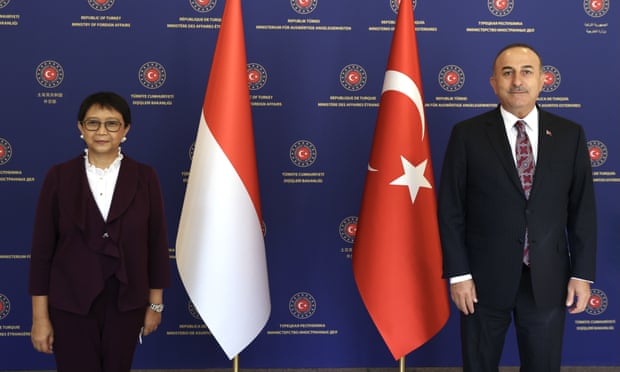
Within Indonesia, the ministry of religious affairs, hand in hand with the country’s two leading Muslim organisations, Nahdlatul Ulama and the education and social charity Muhammadiyah, have created a nationwide network of madrasa-educated women. Setting aside ideological differences, historically both groups have welcomed female students to madrasas.
Although there has been disagreements over their quality, Indonesian madrasas have achieved gender parity in school enrolment. There are also more girls than boys at the upper secondary level.
The Taliban have come up with a variety of excuses for not allowing girls to return to secondary school, but ultimately their conservative brand of faith debars women from working or education.
One diplomat favouring an intervention from Muslim leaders said: “The idea is that figures like Marsudi would go and point out: ‘You say women are not capable and must stay at home and here I am the foreign minister of Indonesia.’ It would not be a lecture but be the power of example.”
Karim Khan, the newly appointed international criminal court chief prosecutor, speaking at the Global Security Forum in Doha, also urged the Taliban to realise they were pursuing an overly harsh form of Islam.
Khan, who is Muslim, said: “The Holy prophet of Islam said very clearly an individual who educates his daughters will go to paradise (Jannah). He told Muslims learn from Aisha. This is the religion of Islam that is completely against people who say that women should not be educated, who target or persecute women for no other reason than their gender. The holy Qur’an says men are garments for women and women are garments for men.”